Best Beginner Casino Strategy: Where to Start in 2026

The best beginner casino strategy ranks Game Vault 999 games by house edge and skill so you know exactly what to play first, how much to bet, and why.
Most beginner casino advice tells you what buttons to press, not what to actually play first. That is the gap this guide closes. The smartest opening strategy is to rank every Game Vault 999 game type by two things only — how much edge the house keeps and how much your own decisions matter — then start where both numbers favor a learner. Get the order right and you stretch a $10 deposit much further while you figure out what you genuinely enjoy.
The One Idea That Beats Every Beginner Tip
Two numbers decide whether a new player's first session feels like a quick wipe-out or a relaxed afternoon. The first is house edge: the long-run percentage the casino keeps from every dollar wagered. The second is decision-skill: how much your choices change the outcome versus pure chance. A complete beginner wants to start in the corner where house edge is low and skill requirements are also low — you keep more of your money without needing to master a strategy chart on day one. From there you can climb toward higher-skill games once the basics feel natural. This is the backbone of the best beginner casino strategy, and it is the part the generic feature tours skip entirely.
Game Vault 999 Game Types Ranked for Day One
Here is how the main categories on Game Vault 999's game library stack up for a brand-new player. Edge ranges are typical industry figures for each category, not promises for any single title — always confirm the specific game's published return-to-player in its info screen before you wager.
| Game type | Typical house edge | Skill needed | Beginner verdict |
|---|---|---|---|
| Blackjack (Blackjack Pro) | Low (around 0.5 to 2 percent with basic play) | Medium | Best value, but learn one strategy chart first |
| Baccarat / banker-style table bets | Low (around 1 to 1.5 percent) | Very low | Excellent first table game — almost no decisions |
| Low-volatility slots (Buffalo King, Mermaid's Pearl) | Medium (around 3 to 6 percent) | None | Ideal pressure-free starting point |
| Fish tables (Fire Kirin, Ocean King, Crab King) | Medium (around 3 to 5 percent) | High | Fun but costs credits fast while you learn aim |
| High-volatility slots (Sweet Bonanza, Mega Vault) | Medium (around 3 to 6 percent) | None | Swingy — save until your bankroll is comfortable |
| Lightning Roulette and live games | Higher (around 5 percent on Lightning bets) | Low | Great atmosphere, weaker math for a first deposit |
| Keno Vault | High (often 20 percent or more) | None | Entertaining but the worst pure value — play last |
What a Complete Beginner Should Play First
Start with a low-volatility slot like Buffalo King or Mermaid's Pearl. Here is the reasoning: a beginner's real first job is not winning, it is learning the rhythm of bankroll, bet sizing, and stopping — and low-volatility slots teach all three with small, frequent payouts that keep a session alive long enough to build the habit. There are no decisions to get wrong, so nothing distracts you from watching how your balance moves. Once you have done two or three relaxed slot sessions and your stop-loss discipline feels automatic, graduate to a table game where your choices start to matter.
Then Move to Baccarat, Then Blackjack
Baccarat is the perfect bridge between slots and skill games. You bet on Player or Banker, the cards resolve themselves, and the banker bet carries one of the lowest house edges on the entire platform with essentially no decision to fumble. It teaches you how a table game feels — the pacing, the bet spots, the payouts — without a strategy chart. After a few baccarat sessions, move to Blackjack Pro. Blackjack rewards correct play more than almost any game here, dropping the edge toward half a percent once you follow basic strategy. That payoff is exactly why it sits a step later in the plan: the skill is worth learning, but only after the fundamentals are solid.
A First-Session Game Plan You Can Copy
- Deposit the $10 minimum to start — there is no reason to risk more while you are learning the platform.
- Open a low-volatility slot (Buffalo King is a forgiving choice) and set your bet to the table minimum.
- Keep each spin to roughly 1 to 2 percent of your balance — on $10 that means around $0.10 to $0.20 per spin.
- Set a hard stop-loss at 50 percent of your deposit and a soft win goal at 50 percent above it, then actually honor both.
- After two relaxed slot sessions, try a few Banker bets in baccarat to feel a real table game.
- Only once that feels natural, open Blackjack Pro with a basic-strategy chart beside you and play the chart, not your gut.
- Log each session — deposit, result, what you played — so your read on your own play is data, not memory.
How Much to Deposit and Bet as a First-Timer
The $10 minimum deposit exists precisely for this stage — use it, and if you want extra learning runway the 100% welcome bonus stretches a small starter bankroll further. Your bet per spin or hand should sit around 1 to 2 percent of your current balance, which on a small starter bankroll means dimes and quarters, not dollars. That ratio is not arbitrary: it gives you enough rounds to actually learn a game before variance can end the session, and it keeps any single unlucky stretch from feeling catastrophic. Resist the urge to chase a loss by sizing up. The daily card and wallet cap of around $2,000 is there for funded players, not a target for a first week. Treat your deposit as the price of an evening's entertainment, and any withdrawal as a pleasant surprise rather than the plan.
The Lowest-Risk Way to Learn Fish Tables
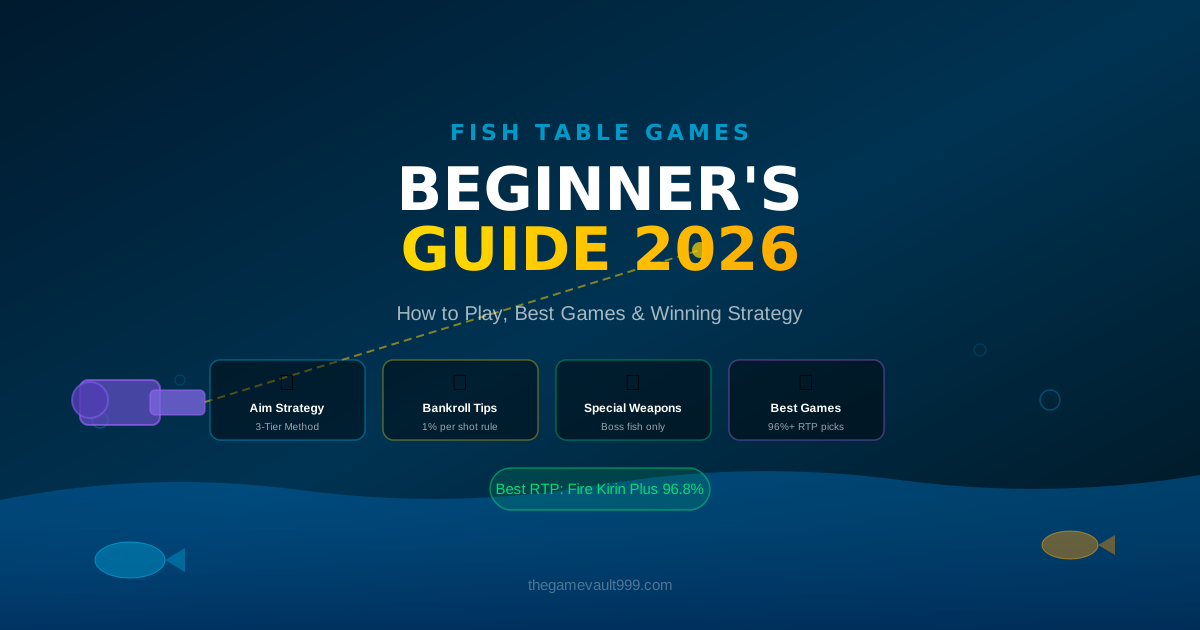
Fish tables like Fire Kirin, Ocean King, and Crab King are the most addictive thing to watch and the most expensive thing to learn on, because skill is high and credits drain with every shot you miss. The low-risk path is to treat your first fish sessions as paid practice on a tiny budget. Use the smallest bullet value, aim only at medium fish for steady returns instead of spraying at giant bosses, and save special weapons for high-value targets where the payoff justifies the cost. Cap a learning session at a few dollars and walk away when it is gone — you are buying the muscle memory of aim and timing, not trying to profit yet. Once your accuracy improves, the edge becomes competitive with slots, but only because your skill closed the gap.
Why Bankroll Rules Matter More Than Game Choice
You can pick the lowest-edge game on the platform and still lose a deposit in minutes if you bet too big and chase. The opposite is also true: disciplined bet sizing and a firm stop-loss will keep almost any game enjoyable far longer than the math alone suggests. That is why every step above pairs a game choice with a number — percentage per bet, stop-loss, win goal. The best beginner casino strategy is really two habits wearing one name: start in low-edge, low-skill territory, and never let a single bet exceed a small slice of your balance. Master those, explore the rest of the catalog at your own pace, and lean on the responsible gaming tools to keep the experience squarely in the entertainment column where it belongs.
What casino game should a complete beginner start with?
A low-volatility slot such as Buffalo King or Mermaid's Pearl. Small, frequent payouts let you learn bankroll and stopping habits with no strategy to memorize, which matters more on day one than chasing the absolute lowest house edge.
Are low-volatility slots better for learning?
Yes. Their steadier, smaller wins keep a session alive longer on a small deposit, so you get more practice time before variance ends the night. High-volatility slots like Sweet Bonanza swing harder and are better saved until your bankroll is comfortable.
Should beginners play table games or slots first?
Slots first, then table games. Slots teach bet sizing and discipline with zero decisions. Once that feels automatic, move to baccarat (almost no decisions, very low edge) and then Blackjack Pro, where learning basic strategy is genuinely rewarded.
How much should a first-timer deposit and bet per spin?
Start with the $10 minimum and keep each bet around 1 to 2 percent of your balance — roughly $0.10 to $0.20 per spin on a $10 deposit. Set a stop-loss at half your deposit and treat the rest as the cost of entertainment.
What is the lowest-risk way to learn fish tables?
Treat early sessions as paid practice on a few dollars. Use the smallest bullet value, target medium fish for steady returns, save special weapons for high-value targets, and stop when your small budget is gone. You are buying aim and timing skill, not profit, at first.
Ready to play Game Vault 999?
Claim your 100% welcome bonus and experience 5-minute payouts.
Get Started Free